차이의 공간 1부: Kim Jisun, Manna Lee, Minjung Lee, Leeje


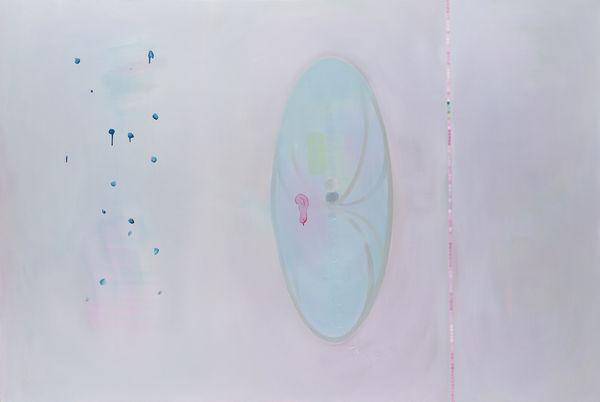
Gallery Chosun will present 《차이의 공간》 from January through March 2013. The exhibition will unfold in two parts.
From January 10 to February 1, Kim Jisun, Manna Lee, Minjung Lee, and Leeje will present works that capture the worlds they have traversed, rendered in their own distinct colours and tonal sensibilities.
From February 13 to March 7, Yujung Chang, Won SeoYeoung, Junho Song, and Gim Deok Yeoung will unfold their individual artistic languages within a shared space.
Artists in every era have reflected the spirit of their time, typifying its values and characteristics. Confronted with the shocks of the worlds and stimuli from outside, the artist’s gaze reaches toward previously invisible structures of existence, influencing inner, spiritual experience. In an age saturated with simultaneous visual signals, the philosophical modes of thought latent within each artist generate countless differences, representing fragments that gather and disperse again. Whether through abstraction, empathy, or other impulses, these differences find varied expressions today.
This exhibition ultimately asks about the forms that difference produces. The participating artists’ modes of thought are also shaped by certain orders and frameworks. Through diverse perceptual structures, they render the worlds they have passed through in their own colours and tones. Within the gap between thought and representation, open yet profound, they both reveal and conceal. The spaces between abstraction and figuration created from the same material establish spatial margins and an overarching ambiguity that generate multiple values. In doing so, they consciously reaffirm both inner reality and the realities of the world and nature. When awareness of one’s essential being is strengthened in this way, and one returns to the external reality of the world, what emerges is thought beyond representation, the richly unfolding world itself.
The personal histories each artist has lived through generate differences as varied as the stories scattered across time. Such differences produce bodily responses in the perception of space and give rise to distinct modes of thought. This exhibition poses a question about the forms created by those differences. The gaps between modes of thinking, formed through relationships with others, and between abstraction and figuration expressed through the same material generate spatial margins and diverse values. In doing so, they prompt a conscious reexamination of one’s internal reality alongside the realities of the world and of nature. Through the multifaceted world that unfolds beyond representation, viewers are offered an opportunity to better understand the diverse forms of contemporary art.
Contemporary art is less a neatly structured narrative than a gathering of fragments that resist forming a single unified whole. For an individual history to be represented as a work of art, there must be at least a minimal framework that allows scattered stories to cohere into a distinct structure rather than remain buried within material. What enables representation to stand as a unified composition rather than a disorderly sequence of episodes is a “framework of perception.” This framework shapes how a particular era understands the world, while simultaneously setting boundaries on thought itself. All definitions rely on categorization and distinction; similarly, our perception of objects is shaped by shared structures of meaning. Meaning emerges through the relationships between the self, the object, and the field, whether understood as space, environment, system, position, layer, or arrangement.